Wireless Network Security
Assess wireless networks for vulnerabilities, weak configurations, and security gaps that could expose your environment to unauthorized access.

Protecting Wireless Networks from Modern Threats
Your wireless network is one of the most overlooked entry points in your entire infrastructure. PlutoSec's wireless security testing goes beyond surface level scans to uncover the real world attack paths hiding in your WiFi, Bluetooth.
OSWP and CWSP certified testers assess your wireless infrastructure against real world attack techniques.
We attempt rogue access point attacks, WPA cracking and client impersonation just like real intruders.
Findings include signal maps, exploited weaknesses and clear hardening recommendations.
Wireless network details and findings stay protected under strict non disclosure agreements.
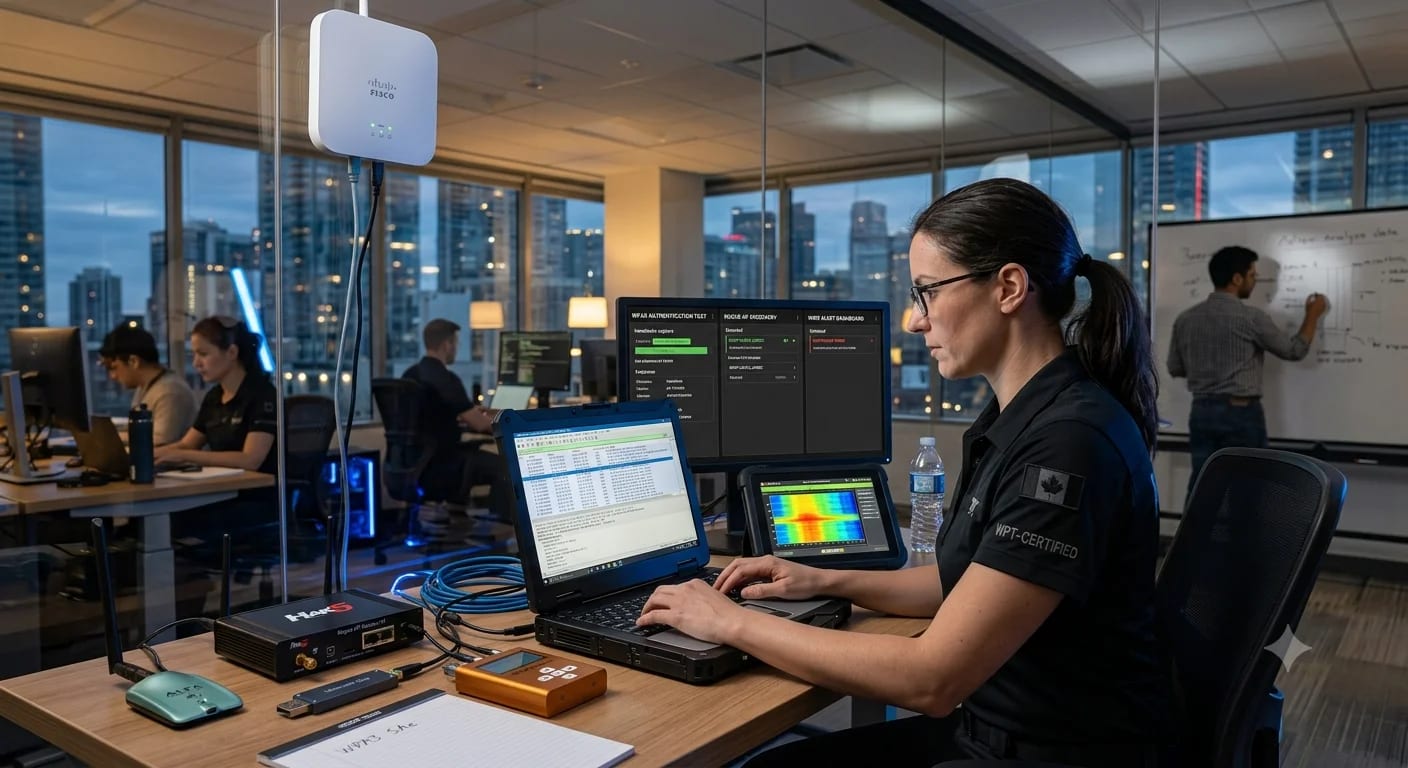
Wireless networks provide flexibility and connectivity, but they also create opportunities for attackers to gain unauthorized access if not properly secured. PlutoSec's Wireless Security Testing services help organizations identify vulnerabilities, insecure configurations, weak encryption settings, and other security weaknesses that could expose critical systems and sensitive data to risk.
Our experienced security consultants assess wireless networks from an attacker's perspective, evaluating access points, authentication mechanisms, network segmentation, and wireless security controls. Through comprehensive testing and actionable recommendations, we help organizations strengthen their wireless security posture and reduce the likelihood of unauthorized access or compromise.
INDUSTRIES WE SERVE
From regulated industries to critical infrastructure, our assessments are scoped for your sector's specific threats and compliance requirements.
Get Started
Protect your business with expert led security assessments, penetration testing, and managed security services. Talk to our specialists today.
We identify the wireless networks, access points, and testing objectives to define the scope of the assessment.
Our consultants evaluate wireless configurations, encryption standards, authentication controls, and network segmentation for security weaknesses.
We identify and validate vulnerabilities, misconfigurations, and potential attack paths that could be exploited by attackers.
After remediation, we verify that identified vulnerabilities have been successfully addressed and security controls are functioning effectively.
Wireless networks are often overlooked attack vectors that can provide direct access to internal systems if not properly secured. PlutoSec helps organizations identify wireless security weaknesses, assess the effectiveness of existing controls, and uncover vulnerabilities that attackers could exploit. Our expert led assessments provide actionable insights that help strengthen wireless security, reduce risk, and improve overall cyber resilience.
Our consultants have extensive experience assessing WiFi networks, wireless infrastructure, and security controls across diverse environments.
We evaluate wireless networks using techniques and methodologies that reflect real world attack scenarios.
Every finding includes clear, prioritized recommendations to help your team address risks and improve wireless security.
Receive comprehensive technical and executive reports that provide complete visibility into vulnerabilities, risks, and remediation priorities.
Assess wireless networks for vulnerabilities, weak configurations, and security gaps that could expose your environment to unauthorized access.
Evaluate wireless access points, controllers, and related infrastructure for insecure settings and configuration weaknesses.
Review wireless authentication mechanisms, encryption standards, and access controls to ensure sensitive communications are protected.
Assess network segmentation and isolation controls between guest, employee, and business-critical wireless environments.
Identify rogue access points, unauthorized devices, and other threats that could compromise wireless security.
Analyze wireless policies, configurations, and security controls to uncover risks and improve overall protection.
What You Get
Get Started
Protect your business with expert led security assessments, penetration testing, and managed security services. Talk to our specialists today.
Identify weaknesses that could allow attackers to gain access to internal systems through your wireless network.
Ensure wireless communications and business-critical information are protected from interception and unauthorized disclosure.
Assess the effectiveness of authentication mechanisms, encryption standards, and wireless security configurations.
Proactively address vulnerabilities before they result in security incidents, data breaches, or operational disruption.
Insights & Research
Hands on analysis from our engineers, current vulnerabilities, emerging attack patterns, and the security decisions shaping enterprise risk in 2026.
GRC services help safeguard your business by effectively managing governance, risk, and compliance through well-defined policies and robust control frameworks.
Read articleFAQ
Answers to the questions we hear most. Still unsure how it applies to your environment? Our engineers are happy to talk it through.
Get Started
Book a short consultation with PlutoSec and get a practical view of where your current security model may be exposed.