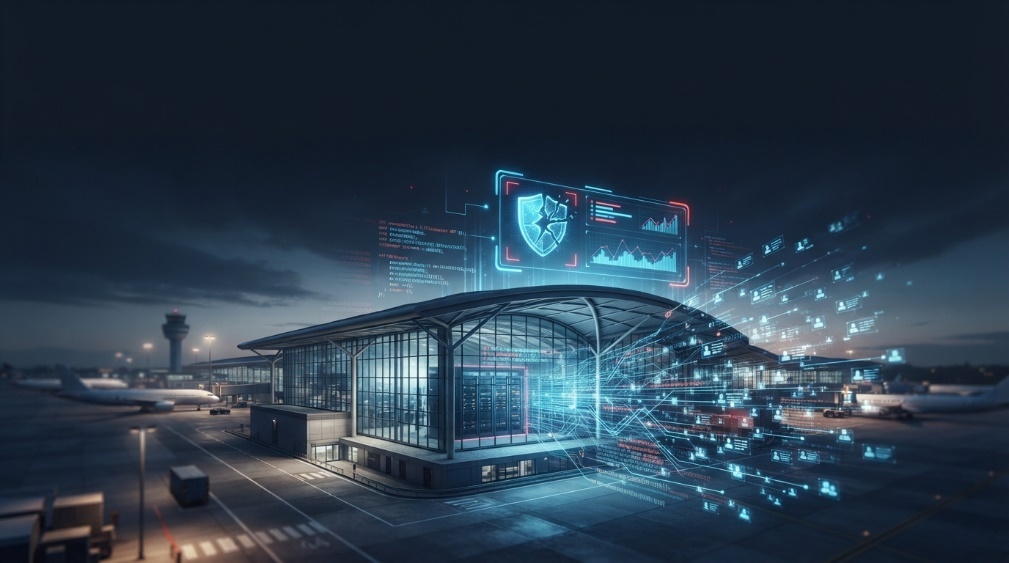
The new cyber threats are changing more rapidly. Attackers have gone to the point of automation, artificial intelligence, and scripted chains of exploits. They scan networks on a regular basis. It takes them a few minutes to take advantage of these loopholes. This speed cannot be compared to traditional testing models.
Scheduled penetration testing is still used by most organizations. Its systems are tested in teams once or twice a year. Reports are delivered. Fixes are applied. Then the cycle pauses. In the course of such a pause, predispositions come into view.
This gap creates risk.
Current businesses are run in the cloud native and API-driven and hybrid places. The infrastructure is changing on a daily basis. Apps are updated on a regular basis. These dynamic systems cannot be proven by the use of static testing frameworks.
Such a change requires the new model.
AI VAPT Agentic gives smartness and autonomy to vulnerability testing and penetration testing. It is not limited to manual testing and simple automation. It develops an organized strategy of persistent security validation.
The most fundamental element of this model is autonomous AI security. Systems are now not waiting till triggered by humans. They identify, predict, and model threats on a real time basis
The Reason Traditional Security Testing Structures Fail
Traditional testing is very labor intensive. They can have pre-defined tool sets and signatures even in cases where the tools are being utilized.
Such tools detect the vulnerabilities that are known. They are not quick to change patterns when executing. Attackers, in their turn, change rapidly. The time interval between the vulnerability creation and detection is increasing. The misconfigurations are not deactivated. Half-hearted authentication flowing continues without detection. API flaws stay exposed. Simple pentesting tools of autonomy make an effort. They survey the surroundings in a short period of time. However they are ignorant of context. They fail to change strategy depending on system behavior. That is the point, in which agentic AI security testing alters the situation. AI-based agents are task-directed as opposed to running static checks. They assess system responses. They modify attack paths. They use simulated adversarial thinking. Businesses without adaptive testing experience: The longer the vulnerabilities are left active, the more impact they have on the business. A efficient framework is not a tool alone. It is an organized framework that is defined by intelligent agents, constant check-ups and workflow coordination. Goal-oriented AI agents are employed by agentic AI VAPT. These agents are used to undertake AI agents vulnerability assessment in which they map assets, determine weak points, and prioritize risk. This model demonstrates agent-based testing of cybersecurity in contrast to the traditional automation. Vulnerability analysis is performed by agents. They venture into enchained lines of exploitation. They measure the actual effect of synergies of weaknesses. This method does not limit itself to gestation of individual faults. It examines daydreams of the attackers in a motion within an environment. Learning mechanisms have also been incorporated in the framework. One testing cycle is enhanced with the other. The future simulations are refined by behavioral patterns. False positives decrease. The accuracy of detection is enhanced. This establishes a process of perpetual excellence. A developed framework has a number of components. In the beginning, there is ongoing asset discovery. With AI engines, endpoints, API and services are identified as soon as they are introduced. That is so that no asset is left untested. Second, smart vulnerability analysis. The system focuses on findings according to business impact and exploitability. Third, attack simulation that is dynamic. The structure is simulated with AI red team so that it mimics the behavior of adversaries in the real world. It tests lateral movement. It studies the escalation of privilege. It measures data leaking conditions. Fourth, workflow coordination Monitored. In case of detecting critical issues, remediation processes are initiated with alerts. Teams handling security are provided with operational information and not general disseminations. Fifth, DevSecOps combination. Assessment correlates with development cycles. New codes are deployed and are validated straight away. Reevaluation is brought about by infrastructure alterations. All these aspects work together in favor of autonomous AI security on scale. The consequence is multiplied protection as opposed to validation. Cyber attacks interfere with operations. They reduce revenue. They destroy customer confidence. One triumphant battle can reveal personal information. The exposure can result in regulation fines and lawful inquiries. It is a fact that reactive defense is always more expensive than proactive validation. When interacted with agentic AI security testing, organizations decrease the exposure of risks. They reduce the window of detection. Their emphasis on remediation is better. They enhance readiness of auditing. Real-time visibility becomes available to executive teams on cyber risk. Security reporting changes to technical language to business level metrics. Such transparency aids in decision-making. Long-term resilience is also enhanced when an investment in Agentic AI VAPT is made. The ongoing testing process will help in avoiding the possibility of having any weakness in infrastructure that has been introduced by the changes. Trust is developed by security maturity in competition markets. Customers like businesses that have shown strategies of being proactive on protection. The future of cybersecurity requires smartness, expediency, and power. Dynamic systems cannot be safeguarded by the use of static structures. It does not only require automation. Real resilience demands adaptive agents in collaboration with the experienced professionals. An effective Agentic AI VAPT model uses a combination of the analysis produced by AI and human experiences. AI scales and does constant validation. The findings are interpreted and remedial strategies designed by security experts. This mixed method strategy brings forth better results. Companies that incorporate independent AI security in the present have placed themselves on the front line before emerging malevolence. They minimize the uncertainty in operations. They guarantee business continuity. Automation is already in use by cybercriminals to perfect attacks. Defense systems have to retaliate with equally sophisticated structures. Here at Ploutosec, we develop and deploy a state-of-the-art Agentic AI VAPT systems with enterprise-specific systems in mind. Our methodology integrates: We are no longer doing simple autonomous pentesting tools. We develop overarching structures that are long-term supportive. In case your organization continues to use periodical testing cycles, the exposure window is also open. It is time to improve your security posture. Ploutosec, the contact person can be reached at +1 (905) 367-6038 or contact(at)ploutosec.ca to get to know how our agentic AI security testing model can secure your business. Waiting until it was breached and unveiled the hidden weaknesses is not an option. Become smart, consistent, and systematized protection and autonomous AI security that is adapted to enterprises of the present day. Compared to conventional static or rule-based testing, agentic AI security testing is flexible and varies as it starts to progress, scouts system behavior, and alters attack paths. AI autonomous security is self-driven cybersecurity that signifies AI-related systems that identify, assess, and simulate threats by real-time without the periodic manual testing cycles. The vulnerability assessment idea of AI agents finds interdependent weaknesses and ranks the risks in terms of usability and business relevance. The automation of the Red team through AI imitates the advanced techniques of the opponent to ensure that how well an organization can manage to identify and respond to physical instances of attack.
What is an Agentic AI Security Testing Framework
Fundamentals of An AI Agentic Testing Framework
Impact on business, Agentic AI Security Testing.
Creating a Future-Ready Architecture of Security
Enhance Your security with Ploutosec
FAQs
What is the difference between agentic AI security testing and traditional testing?
What is an autonomous AI security within the cybersecurity systems?
What is the value of AI agents vulnerability assessment models in promoting security?
How does AI red team automation get involved in contemporary testing?

Written by
Admin User