With the development of the digital economy in Canada, the cloud environment contains sensitive data, customer information, and vital business applications. Cloud computing has found its way into being a prime target for cybercriminals who employ ransomware, supply chain attacks and insider threats to cloud platforms. Companies based in Toronto to Vancouver are using cloud platforms to store data, to execute applications and to support hybrid or multi-clouds. The necessity to secure the cloud, either through proper knowledge or practice, is no longer debatable as companies shift most of their crucial operations to the cloud. Attacks on cyber are becoming more complex, and a minor failure in configurations can cause severe breaches of reputation, customer confidence, and adherence to Canadian laws.
Cloud security in 2026 transcends firewalls or passwords. Issues relating to identity and access management, API security, workload monitoring in the cloud, and risk management among third-party vendors are unique issues that organizations have to manage. Another burden placed on Canadian businesses concerns the following rules to be followed and implemented: PIPEDA, SOC 2, and ISO 27001, among others. The efficient and timely protection of sensitive data through a proactive method cannot be achieved without technology, procedures and expertise.
PlutoSec assists Canadian organisations in filling these gaps by offering high-tech cloud security solutions to the local business environment. PlutoSec can maintain the security of the cloud environment through vulnerability assessments, cloud penetration testing, constant surveillance and threat detection. Knowing the possible threats and using the time-tested methods, companies can embrace cloud technologies and minimise the risks of cyber attacks.
What Is Cloud Security?
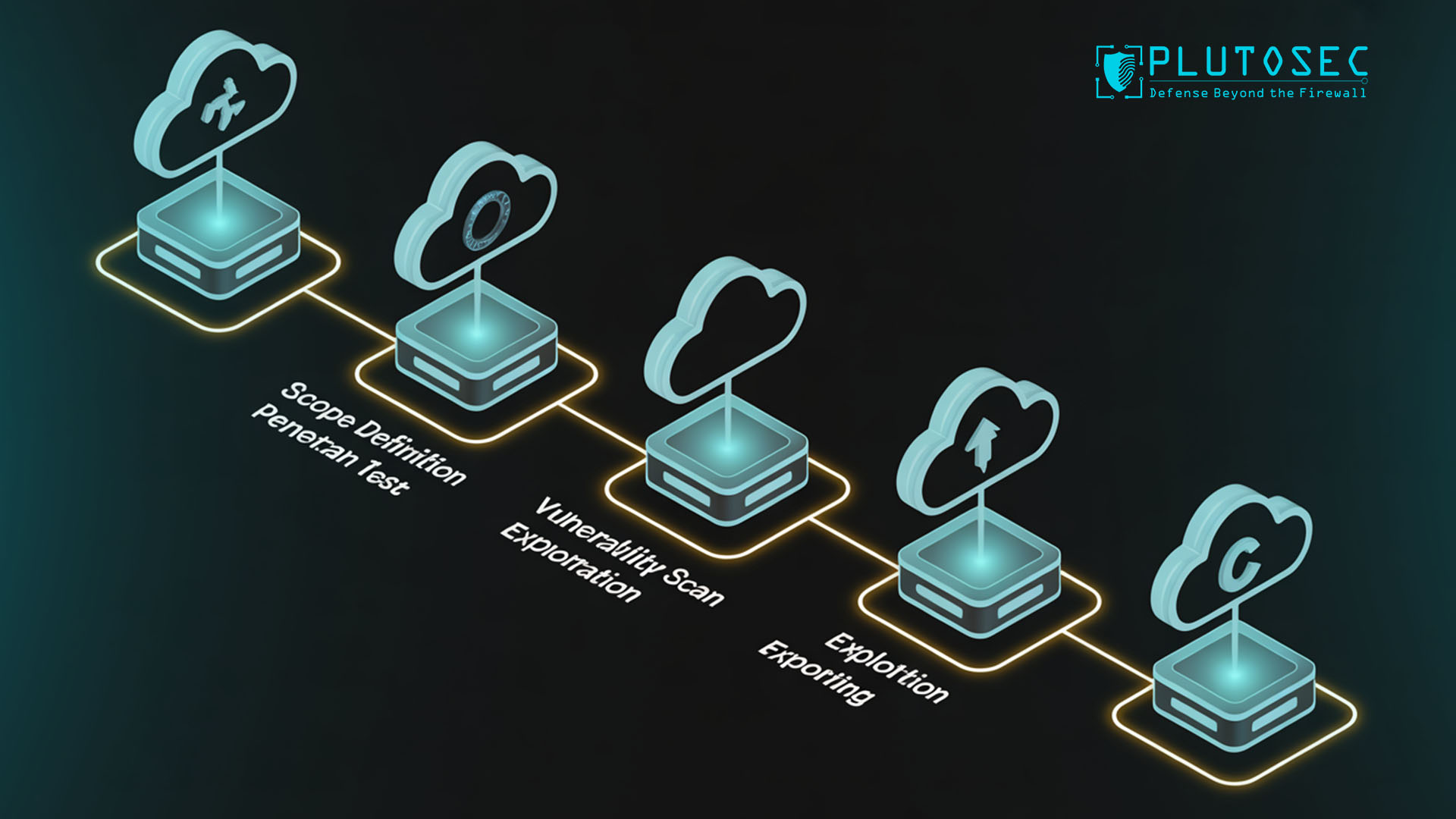
Cloudsecurity is a framework of tools, policies and processes aimed at ensuring the protection of data, applications and cloud infrastructure. Cloud environments have a shared responsibility between providers and businesses, unlike the traditional on-premise-based solutions, where the organisation is required to actively control its security. These involve controlling access, storage security, compliance and misconfigurations.
Services such as AWS, Azure, and GCP have in-house safeguards such as encryption, identity, and activity controls. It is, however, dangerous to rely on these native features alone. To fully protect their cloud workloads, Canadian companies should implement new strategies such as continuous scanning of vulnerabilities, threat monitoring, and reviewing access.
Using cloud security best practices, businesses can minimise the chances of data breaches, keep their systems secure and reliable, and ensure regulatory compliance. Knowledge of these roles is paramount to any Canadian business that would stay updated with sensitive information, as well as be able to maintain customer confidence in 2026.
The importance of cloud security in 2026.
Since the digital economy of Canada is developing, there is sensitive data, customer information, and important business applications that are managed in cloud environments. All these factors make cloud platforms appealing to ransomware, supply chain, and insider threat cybercriminals. Independent systems are vulnerable to the exposure of infrastructures due to weak access controls, improperly configured storage, and unsafe APIs.
Remote work has also increased the area of attack, with more employees potentially connecting to cloud systems at different locations. Companies that do not implement sound cloud security face the risk of losing their money, being fined and losing reputation.
Developed cloud security approaches, such as vulnerability management, constant monitoring and stringent access control, are necessary. PlutoSec assists Canadian organisations with the implementation of these strategies, which will guarantee their stability in their operations and resistance to the emerging cyber threats.
Typical Cloud Security Threats and Weaknesses.

Poorly configured storage buckets, ineffective identity and access control, unsecured APIs, and an unpatched system are the leading risk factors in cloud security in 2026. As an example, the fact that an AWS S3 bucket can be left public or given too many permissions may lead to leaks of sensitive data.
Compromised credentials and insider threats are also major problems and are particularly worrisome when privileged accounts are at stake. The multi-cloud environment complexity is augmented, and the monitoring process should be regular across platforms.
Such proactive efforts as cloud penetration testing, automated monitoring, and access audits can be used to find out vulnerabilities before attackers can benefit. PlutoSec collaborates with Canadian companies to ensure the implementation of these security measures to have secure and robust cloud environments.
Emerging Threats in Cloud Environments
Cloud threats are changing fast in 2026. Cybercriminals are now taking advantage of multi-cloud systems, using AI-enabled attacks, visiting containers, and assaulting supply chains. Advanced Persistent Threats (APTs) are targeted at the workloads in the clouds, staying unnoticed and robbing the sensitive data.
There is the growth of zero-day exploits and ransomware attacks on cloud databases, and the insider threat that still poses a threat to privileged accounts. Poorly configured storage and open APIs are some of the main entry points.
PlutoSec is mitigating these threats with the help of real-time monitoring, behavioural analytics, and cloud penetration testing. Canadian companies will be able to address advanced threats without conflicting with compliance and continuity.
Best Practices for Ensuring Cloud Data Security.
A multi-layered approach is necessary towards cloud security in 2026. Key practices include:
Encryption: Secure the data at rest and in transit.
Identity & Access Management (IAM): Implement multi-factor authentication and the least-privilege access.
Vulnerability Management: Periodically identify misconfigurations and security vulnerabilities.
Constant Surveillance: Immediately identify suspicious activities and illicit entry.
Training of employees: Minimise the human factor when security policies are raised.
Through the practices, Canadian businesses are able to safeguard sensitive data, minimise business risks and ensure adherence to national and international standards.
Guide to Cloud Penetration Test.

Cloud penetration testing replicates actual computer attacks to identify the weaknesses in the cloud environments. This involves evaluation of access controls, storage permissions, and network security, as well as APIs in AWS, Azure, GCP, or a hybrid configuration.
Testing is also conducted to expose vulnerabilities before they can be exploited by the attacker, assesses the adherence to privacy policies and makes thorough reports to be fixed. The frequent penetration testing, coupled with constant monitoring,g will help keep cloud defences sound and robust against the changing threats.
PlutoSec does extensive penetration testing specific to Canadian businesses that gives actionable advice and assists organisations in proactively enhancing their cloud security posture.
The role of PlutoSec with respect to cloud security solutions.
PlutoSec offers full cloud security services to Canadian companies. They offer vulnerability management, cloud penetration testing, threat detection, access management and regulatory compliance support services.
PlutoSec lessens the threat of breaches and offers business continuity by combining enhanced monitoring, IAM enforcement, and proactive security activities. Multi-cloud and hybrid environments solutions are focused on ensuring high levels of security maturity and regulatory compliance in businesses.
The Canadian organisations that collaborate with PlutoSec have a reliable security partner in cloud security and can keep their cloud infrastructure safe, resilient, and future-safe.
FAQs
What is cloud security?
Cloud security offers defence against breaches and cyber threats to cloud-hosted data, applications, and infrastructure.
What is the importance of cloud security in 2026?
Multi-cloud and remote work have made breaches more complex and dangerous.
What are typical risks to cloud security?
Such risks are improperly configured storage, poor access control, insecure API, and insider threats.
What is the frequency of cloud penetration testing?
Regular testing should be done, as well as following any major alteration to cloud infrastructure or applications.
What benefits does PlutoSec solutions have for cloud security?
PlutoSec offers monitoring, vulnerability management and penetration testing of AWS, GCP and hybrid architecture.
Conclusion

The proactive, multi-layered work on cloud security in 2026 is comprehensive. To be ahead of threats, businesses have to integrate best practices, periodic cloud penetration testing, ongoing monitoring and robust access controls. It is not good to simply trust the cloud provider's security.
Collaborating with PlutoSec, the Canadian businesses will be able to detect weaknesses, mitigate risks, ensure compliance, and secure sensitive data. Being ahead of the game, adopting strong measures, and using up-to-date solutions by the experts in cloud security, like us, Plutosec, is the way to be resilient and run a successful business in the long run.

Written by
Jonathan Zachary